
The $7,500 federal EV tax credit is gone. Since September 30, 2025, no new or used EV purchase qualifies for a federal credit — so what you save now depends almost entirely on where you live. This guide to EV incentives by state 2026 shows exactly what’s still on the table.
The good news: more than 30 states offer an EV purchase rebate or tax credit in 2026, from $750 up to $12,500 for income-qualified buyers who stack programs. September 2026 tracking data shows 51% of the U.S. covered by at least one nonfederal EV purchase incentive, 141 state and local programs open, and the average incentive up about 8% from a year ago. Several states have stepped up to fill part of the federal gap.
Here’s which programs pay the most, and how to claim yours before funding runs out.
What Happened to the Federal EV Credit?
The federal clean vehicle credit — up to $7,500 for new EVs, $4,000 for used — expired September 30, 2025, under the One Big Beautiful Bill Act (what changed). Nothing bought after that date qualifies.
One federal incentive survives: the 30C home charger credit covers 30% of equipment and installation costs, up to $1,000, through June 30, 2026. Install a Level 2 charger before July 1 to claim it on your 2026 return. That deadline makes the EV incentives by state 2026 picture even more important for the rest of the year.
How State EV Incentives Work in 2026
Three program types dominate the EV incentives by state 2026 lineup:
- Point-of-sale rebates cut the price at a participating dealer — no waiting for tax season. California’s MyFirstEV works this way.
- State tax credits come back at filing time; Colorado lets you assign the credit to the dealer for an instant discount.
- Income-qualified programs post the biggest numbers — up to $12,500 — but require income limits and sometimes retiring an older vehicle.
Fine print matters: most programs cap vehicle price ($45,000–$55,000), require residency, and run on limited funding. Verify with your state energy office or the DOE’s AFDC before buying.
The 8 Best EV Incentives by State 2026
1. California — up to $12,000 (stackable). MyFirstEV (launched August 2026): instant $3,500 off a new zero-emission vehicle up to $50,000 MSRP, or $1,750 off a qualifying used ZEV up to $25,000 — no income cap, applied at participating dealers, stackable. Separately, Clean Cars 4 All gives income-qualified residents who retire an older vehicle up to $12,000 plus $2,000 for charging equipment. Brands include Hyundai, Chevy, Ford, Kia, Rivian, Lucid, Toyota, and Honda.
2. Oregon — up to $12,500 (stackable). The Clean Vehicle Rebate Program reopened August 25, 2026, for new and used EVs and plug-in hybrids: up to $7,500 for income-qualified buyers, with maximum stacked savings of $12,500 per state trackers.
3. Maine — up to $7,500. Efficiency Maine rebates reach $7,500, matching the old federal credit dollar for dollar.
4. Colorado — up to $9,000. A $750 refundable state income tax credit for 2026 purchases, plus $2,500 more for vehicles under $35,000 — assignable to the dealer for an instant discount. Vehicle Exchange Colorado adds $9,000 toward a new EV or $6,000 toward a used one for income-qualified buyers replacing an older vehicle (pre-purchase approval required).
5. New Jersey — up to $6,500. Charge Up NJ offers up to $4,000 on eligible new EVs, with income-qualified incentives pushing the max near $6,500. Note: New Jersey charges EV owners a $260 annual registration fee.
6. Massachusetts — up to $6,000. MOR-EV pays up to $3,500 on qualifying EV purchases or leases, rising to $6,000 for income-qualified applicants.
7. New Mexico — up to $3,000, new and used. Clean Car tax credits: $3,000 for a new battery EV, $2,500 for a new plug-in hybrid or used battery EV, $2,000 for a used plug-in hybrid — plus $400 for home charging equipment. Covers purchases from May 15, 2024 through December 31, 2029.
8. Pennsylvania — up to $4,000 (income-eligible). $3,000 for a battery EV or $1,500 for a plug-in hybrid to income-eligible residents, plus $1,000 more for lower-income applicants. Vehicle price generally capped at $45,000; first-come, first-served.
Also in the 2026 mix: Vermont (up to $5,000), Oklahoma (up to $5,500), Connecticut ($750–$5,000), Illinois ($4,000), Kansas (up to $4,000), New York ($500–$2,000 Drive Clean Rebate), Virginia ($2,500), Maryland ($3,000), Delaware ($1,000–$2,500), Rhode Island (up to $1,500), and Washington DC (up to $5,000).
EV Incentives by State 2026: Complete Comparison Table
Maximums assume income eligibility where required.
| State | Program | Max incentive |
|---|---|---|
| California | MyFirstEV + Clean Cars 4 All | Up to $12,000 (stacked) |
| Oregon | Clean Vehicle Rebate Program | Up to $12,500 (stacked) |
| Maine | Efficiency Maine | Up to $7,500 |
| Colorado | Motor Vehicle Credit + Vehicle Exchange | Up to $5,000 credit; up to $9,000 exchange |
| New Jersey | Charge Up NJ | Up to $6,500 |
| Massachusetts | MOR-EV | Up to $6,000 |
| Oklahoma | Alternative fuel tax credit | Up to $5,500 |
| Vermont | State incentive | Up to $5,000 |
| Connecticut | CHEAPR rebate | $750–$5,000 |
| Illinois | EV rebate | $4,000 |
| Kansas | EV incentive | Up to $4,000 |
| Washington DC | EV incentive | Up to $5,000 |
| Pennsylvania | Alternative Fuel Vehicle Rebate | Up to $4,000 (income-eligible) |
| New Mexico | Clean Car Tax Credits | Up to $3,000 |
| Maryland | Excise tax credit | $3,000 |
| Virginia | EV rebate | $2,500 |
| New York | Drive Clean Rebate | $500–$2,000 |
| Delaware | Clean Vehicle Rebate | $1,000–$2,500 |
| Rhode Island | DRIVE EV rebate | Up to $1,500 |
States not listed generally have no active EV purchase incentive in 2026. Funding and eligibility change fast — verify with your state energy office before buying.
Used EVs: An Overlooked Slice of EV Incentives by State 2026
The federal $4,000 used EV credit is gone, but states kept several used-vehicle programs:
- Colorado — $6,000 toward a used EV via Vehicle Exchange Colorado (income-qualified, replaces an older vehicle).
- California — $1,750 off a qualifying used ZEV up to $25,000 via MyFirstEV.
- New Mexico — $2,500 tax credit for a qualifying used battery EV; $2,000 for a used plug-in hybrid.
- Oregon — the reopened Clean Vehicle Rebate covers qualifying used EVs and plug-in hybrids.
Used EVs have already absorbed their steepest depreciation, so a state rebate on a $20,000 used EV can push your effective price into genuinely cheap territory.
Stacking: Combine Incentives and Save More
Savvy buyers often combine a state rebate with a utility rebate ($200–$2,500) and manufacturer discounts — some programs explicitly allow it. Trackers estimate $3,000 to $10,000+ in combined savings in the friendliest states.
Stacking rules for EV incentives by state 2026:
- Check each program’s stacking rules. California’s MyFirstEV stacks with Clean Cars 4 All; not every state is this generous.
- Call your electric utility. Utility EV and charger rebates are among the easiest dollars available, and most buyers never ask.
- Mind the caps. Headline maximums assume income limits and price caps — California’s $50,000 MSRP limit excludes many higher-trim EVs.
- Watch the calendar. Budget-funded programs can pause without warning when money runs out.
Home Charging Incentives in 2026
The vehicle rebates get the attention, but charging incentives are the quiet second act of EV incentives by state 2026:
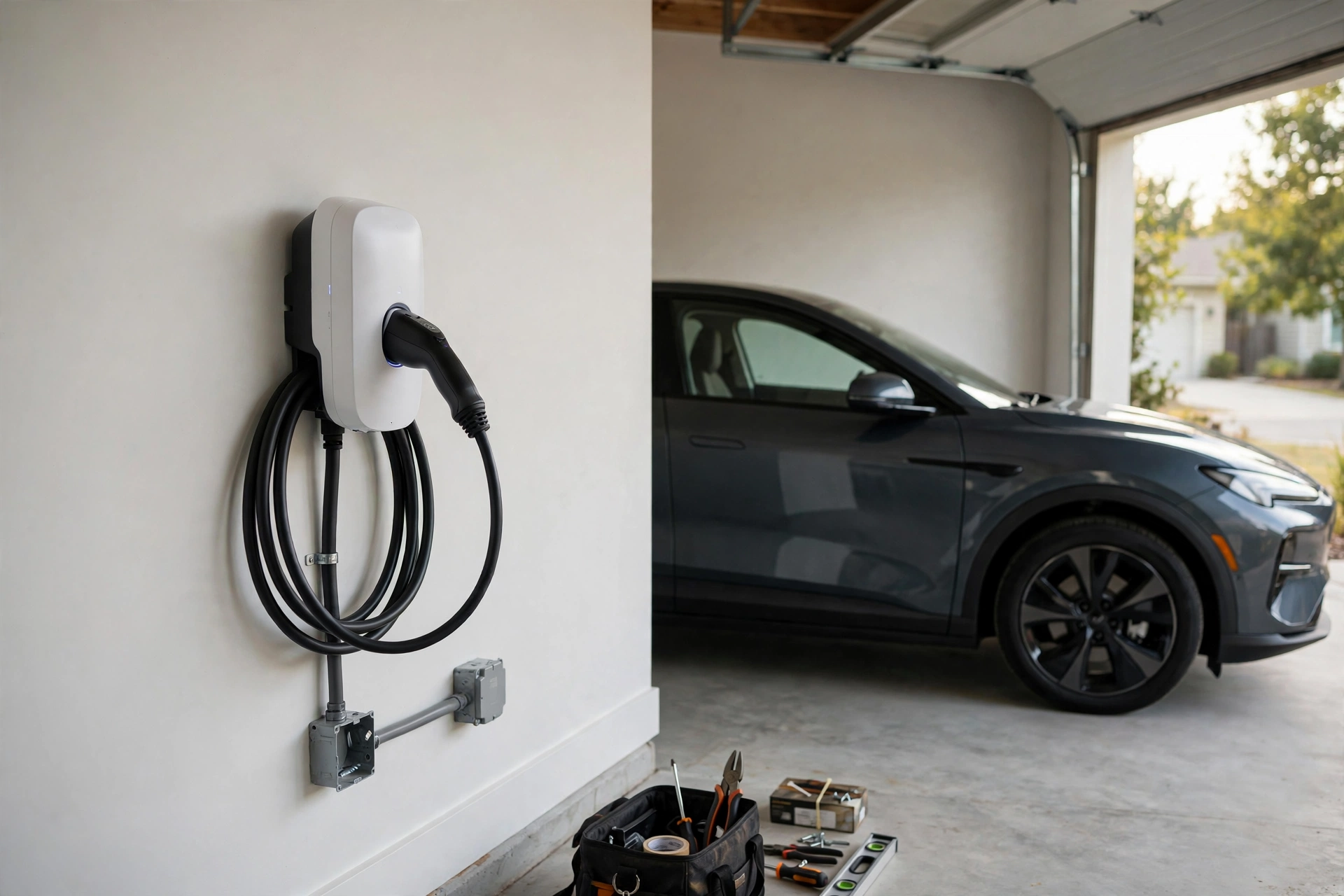
- Federal 30C credit: 30% of home charger equipment and installation, up to $1,000 — only through June 30, 2026.
- New York: home charger installation incentives on top of the Drive Clean vehicle rebate.
- New Mexico: $400 state tax credit for qualifying home charging equipment.
- California: Clean Cars 4 All can add up to $2,000 toward charging equipment or a prepaid charging card.
- Utility rebates: $200–$2,500 for Level 2 charger installation; the national average residential rebate is about $590.
States With No Incentive — and Fees to Watch
Roughly half the states offer no EV purchase incentive in 2026 — and 30+ charge EV owners an extra annual registration fee to replace lost gas-tax revenue. The heaviest: New Jersey ($260), Georgia (~$235), Indiana ($230), Alabama ($203), and Ohio, Texas, and Tennessee ($200 each). A $2,000 rebate minus a $200 annual fee is still a clear win.
How to Claim Your State’s EV Incentive
- Verify funding. Check your state energy office or the DOE’s Alternative Fuels Data Center — EV incentives by state 2026 shift as budgets run dry.
- Confirm eligibility. Income limits, residency, and the vehicle’s MSRP versus the program cap.
- Learn how it’s paid. Point-of-sale rebates (California, New York) happen at the dealer; tax credits (Colorado, New Mexico, Pennsylvania) arrive at filing time or are dealer-assignable.
- Get pre-approval if required. Colorado’s Vehicle Exchange needs approval before purchase; Pennsylvania is first-come, first-served — apply within six months.
- Keep your paperwork. Purchase contract, registration, and income documentation are standard.
- Don’t miss the charger credit. The federal 30C credit expires June 30, 2026 — schedule a Level 2 install now.
Frequently Asked Questions
Is there a federal EV tax credit in 2026?
No. The up-to-$7,500 new-EV and $4,000 used-EV federal credits expired September 30, 2025. Only the 30C home charger credit (30% up to $1,000) survives, ending June 30, 2026.
Which state has the best EV incentive in 2026?
Oregon and California top the EV incentives by state 2026 rankings, with stacked savings up to $12,500 and $12,000 for income-qualified buyers. For a simple program with no income cap, California’s $3,500 instant MyFirstEV rebate and Maine’s $7,500 rebate stand out.
Can I combine state EV incentives with other discounts?
Often. Many buyers stack a state rebate with a utility rebate and manufacturer discounts for $3,000–$10,000+ total. Not every program allows it — read the fine print.
Do EV incentives apply to leases?
Usually. Most 2026 state programs — MyFirstEV, New York’s Drive Clean Rebate, MOR-EV — cover leases as well as purchases, sometimes prorated by lease term.
Do used EVs qualify for state incentives?
Yes — used vehicles are a growing part of EV incentives by state 2026: Colorado (up to $6,000), California ($1,750), New Mexico ($2,500 tax credit), and Oregon’s reopened program all cover qualifying used EVs.
What if my state has no EV rebate?
Check your utility for EV and charger rebates ($200–$2,500), look for manufacturer and dealer discounts, and claim the federal 30C home charger credit before June 30, 2026.
The Bottom Line
The end of the federal EV tax credit didn’t end EV savings — it relocated them. The EV incentives by state 2026 landscape rewards buyers who do their homework: stack the right state programs with utility rebates, and claim charging credits before deadlines. Verify funding first, get pre-approvals before you sign — the money is still there for the taking.


2 Comments