
Cost to Charge Electric Car at Home: 7 Ways to Cut It
Meta description: What’s the real cost to charge electric car at home in 2026? About $11–$15 per full charge — far cheaper than gas. See the math, tables, and 7 saving tips.
How Much Does It Really Cost to Charge an Electric Car at Home?
The cost to charge electric car at home in 2026 is surprisingly low. At the U.S. average of roughly 18 to 19 cents per kWh, a full charge on a typical 60-kWh EV costs about $11 and a 75-kWh battery runs around $14 — roughly five to six cents per mile, less than half the cost of gasoline.
About 80% of all U.S. EV charging happens at home — at a fraction of public fast-charging prices, saving roughly $1,000 a year versus a comparable gas car. Here’s the math, what drives your bill, and seven ways to keep the cost to charge electric car at home low.
The Formula Behind the Cost to Charge Electric Car at Home
You don’t need a spreadsheet. The formula is simple:
Battery size (kWh) × your electricity rate ($/kWh) = cost of a full charge
To find your rate, grab your latest electric bill and divide the bottom-line dollar total by the kilowatt-hours used — that includes delivery charges and taxes, which is the number that matters.
A second formula gives cost per mile:
(kWh per 100 miles ÷ 100) × your electricity rate = cost per mile
Most EVs consume 25 to 35 kWh per 100 miles. At the national average rate, that’s roughly 5 to 6 cents per mile. A 30-mpg gas car at $3.80 a gallon costs nearly 13 cents per mile — more than double.
Cost to Charge Electric Car at Home by Battery Size
Your battery size is the biggest factor in any single session. Here’s what a full charge costs at three different 2026 electricity rates:
| Battery size | At 13¢/kWh | At 19¢/kWh (U.S. average) | At 30¢/kWh |
|---|---|---|---|
| 40 kWh (compact EV) | $5.20 | $7.60 | $12.00 |
| 60 kWh (mainstream EV) | $7.80 | $11.40 | $18.00 |
| 75 kWh (midsize EV) | $9.75 | $14.25 | $22.50 |
| 100 kWh (truck / large SUV) | $13.00 | $19.00 | $30.00 |
A couple of caveats apply. You almost never charge from completely empty — a typical overnight session adds 40 to 60 percent, not 100 percent. Also, charging isn’t perfectly efficient: roughly 10 percent of electricity is lost as heat, so expect the meter to spin a little more than the raw battery math suggests.
The Average Monthly Cost to Charge Electric Car at Home
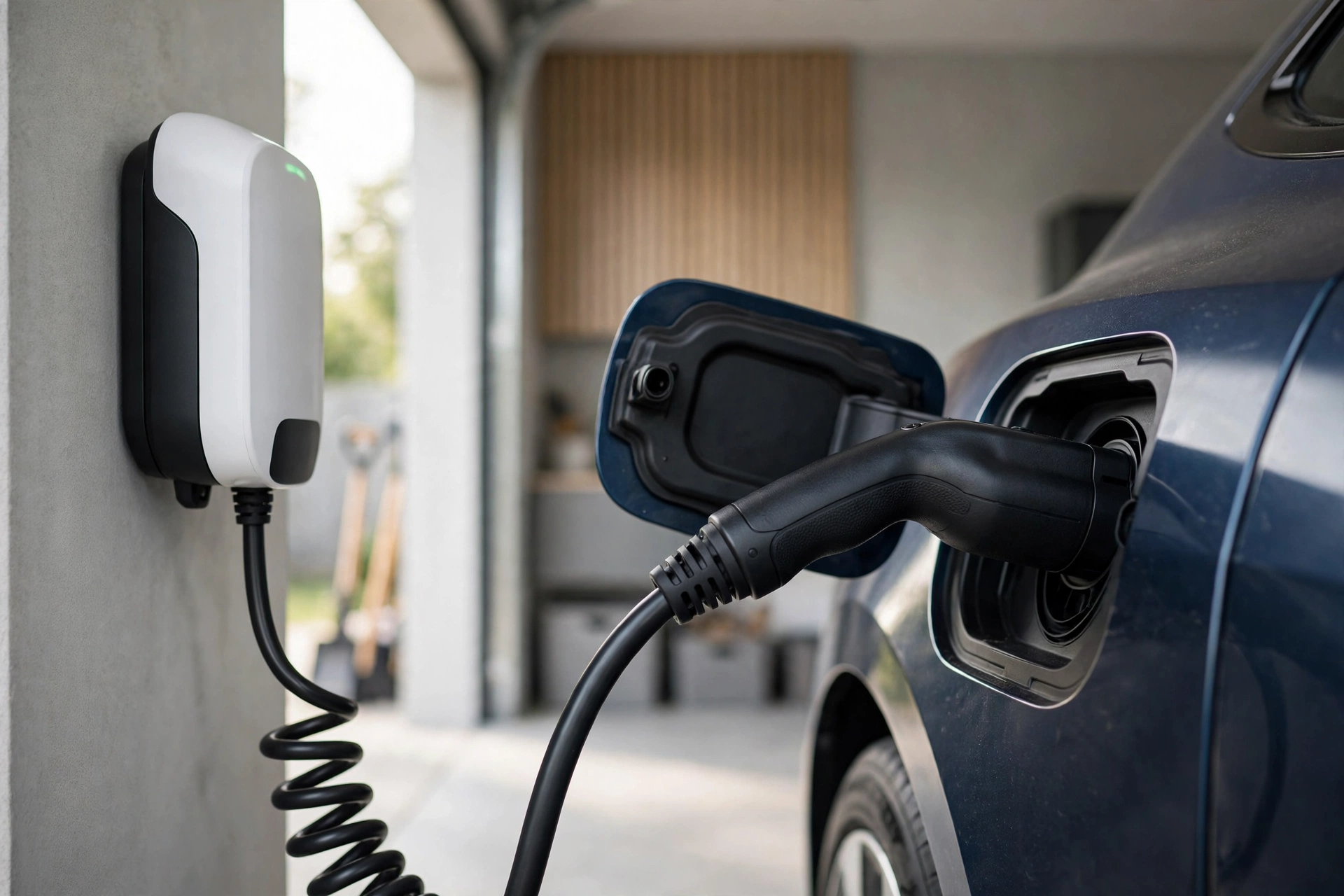
The average American drives about 1,000 miles a month — roughly 300 to 340 kWh for an EV getting 3.3 miles per kWh.
At the U.S. average residential rate, the monthly cost to charge electric car at home lands around $55 to $65. For the same mileage in a gasoline car, you’d spend roughly $125 or more on fuel. Over 12,000 miles a year, home charging runs about $684 versus close to $1,785 for gas at current pump prices.
Electricity prices vary widely by state — KBB’s EV charging cost guide notes EIA 2026 data showing rates above 30 cents per kWh in some states while others pay less. Plug in your own rate for an accurate figure.
Cost to Charge Electric Car at Home vs. Public Charging
Where you charge matters as much as what you drive. Home electricity averages about 19 cents per kWh, while public charging costs substantially more:
| Charging option | Typical rate | 75-kWh full charge | Annual cost (12,000 mi) |
|---|---|---|---|
| Home (Level 2) | ~19¢/kWh | ~$14 | ~$684 |
| Public Level 2 | ~30¢/kWh | ~$22.50 | ~$1,080 |
| Public DC fast charging | ~40–55¢/kWh | ~$30–$41 | ~$1,980 |
As the numbers show, relying on public DC fast chargers can cost nearly three times what home charging costs — and in some cases erases the fuel savings versus gasoline entirely. Charge at home for daily driving and use fast chargers only on road trips.
Cost to Charge Electric Car at Home vs. Buying Gasoline
Let’s put the two head to head with 2026 figures:
- Cost per mile, home charging: 5–6 cents at the national average electricity rate
- Cost per mile, gasoline: about 13 cents for a 30-mpg car at $3.80/gallon
- Annual fuel cost (12,000 miles): ~$684 (home EV charging) vs. ~$1,785 (gasoline)
- Annual savings: roughly $1,100 for the home-charging EV driver
Even in high-cost electricity states at 30 cents per kWh, home charging still undercuts gasoline for most drivers — and across five years, the fuel-cost gap runs into the thousands of dollars.
Level 1 vs. Level 2: What Affects the Cost to Charge Electric Car at Home
The ongoing electricity bill is only part of the picture — you also need the equipment to get that power into the car.
Level 1 charging uses a standard 120V household outlet and costs essentially nothing to set up. The downside is speed: it adds only 3 to 5 miles of range per hour, or roughly 30 to 40 miles overnight. That’s fine for plug-in hybrids or drivers under 30–40 miles a day, but it’s slower and slightly less efficient (80–85%), wasting more electricity as heat.
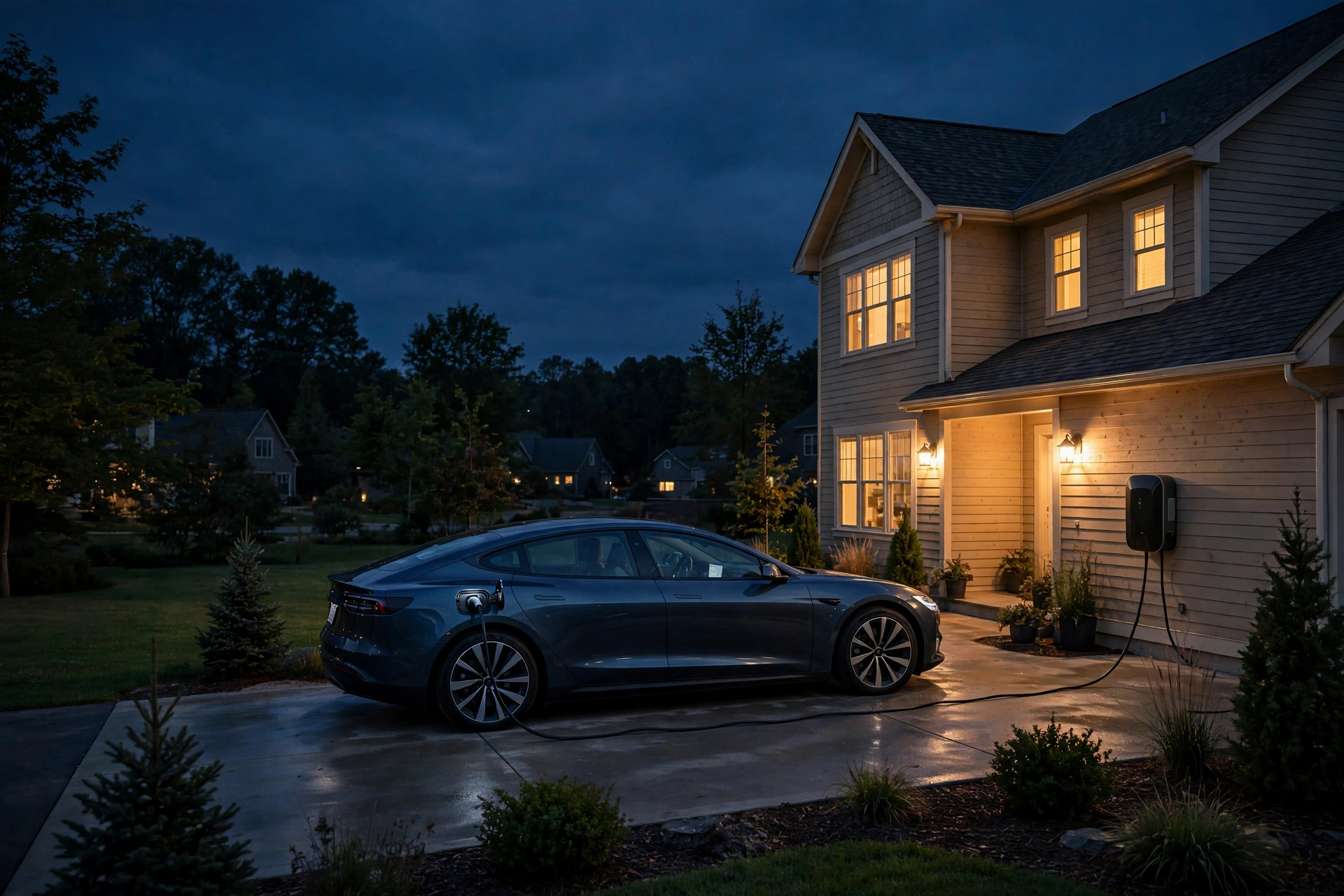
Level 2 charging uses a 240V dedicated circuit and adds 20 to 35 miles of range per hour — enough to refill an EV overnight. Typical all-in installation costs in 2026:
| Scenario | Charger hardware | Electrician + materials | Total |
|---|---|---|---|
| Garage near panel, spare capacity | $400–$700 | $300–$800 | $750–$1,500 |
| Longer wire run | $400–$700 | $1,000–$2,000 | $1,500–$2,700 |
| Panel upgrade needed | $400–$700 | $2,000–$4,500 | $2,500–$5,200 |
Installer data on the typical Level 2 installation cost puts the range at $1,200 to $2,500, averaging near $1,700 for straightforward setups. If your home has an older 100-amp panel, budget $1,500 to $3,000 for an upgrade.
One important 2026 change: the federal 30% EV charger tax credit (up to $1,000) ended for installations placed in service after June 30, 2026 — if a quote still lists it, the quote is out of date. Many state utilities still offer rebates of $250 to $1,000+, so check local programs before you pay full price.
7 Best Ways to Lower the Cost to Charge Electric Car at Home
1. Switch to a time-of-use (TOU) electricity plan. Many utilities offer overnight rates of 8 to 12 cents per kWh — half the standard rate. Ask your utility about EV-specific rate plans.
2. Schedule charging during off-peak hours. Set your EV or charger to start after peak pricing ends. Even without a TOU plan, avoiding late-afternoon peak windows lowers your overall bill.
3. Use Level 2 instead of Level 1. Level 2 chargers run at 90–95% efficiency versus 80–85% for Level 1, saving $30 to $50 a year in wasted electricity over 12,000 miles — plus a full charge every morning.
4. Claim utility rebates before installing. With the federal credit gone, state and utility incentives worth $250 to $1,000+ are your best discount — they can knock a third off a typical installation.
5. Precondition while plugged in. Heating or cooling the cabin while still plugged in draws grid power, not battery power — preserving range and reducing charging sessions.
6. Keep tires inflated and drive smoothly. An EV using 30 kWh per 100 miles instead of 35 costs roughly 15% less per charge. Aggressive driving and underinflated tires are a silent surcharge on every session.
7. Check your whole bill, not just the kWh rate. Fees and tiered pricing can push your real cost above the advertised rate. Divide your total bill by total kWh yearly to confirm you’re on the cheapest plan.
Frequently Asked Questions
Q: How much does it cost to charge an electric car at home per month?
A: The average cost to charge electric car at home per month is roughly $55 to $65 for about 1,000 miles of driving at the U.S. average rate of 18 to 19 cents per kWh. Drivers in low-cost states may pay under $40; those in high-cost states could see $90 or more.
Q: Is it cheaper to charge an EV at home or at a public station?
A: Home charging is dramatically cheaper — ~19 cents per kWh versus ~30 cents for public Level 2 and 40 to 55 cents for DC fast charging. A 75-kWh fill-up costs about $14 at home but $30 to $41 at a fast charger.
Q: How much does a Level 2 home charger cost to install?
A: Most homeowners pay $1,200 to $2,500 all-in, with a national average around $1,700. Hardware runs $400 to $700; an electrical panel upgrade, if needed, adds $1,500 to $3,000.
Q: Does the federal tax credit for home EV chargers still exist?
A: No — the 30% credit (up to $1,000) ended for chargers placed in service after June 30, 2026. State and utility rebates of $250 to $1,000+ are still available in many areas.
Q: How long does it take to charge an EV at home?
A: A Level 2 charger adds 20 to 35 miles of range per hour, so most EVs recharge overnight in 6 to 10 hours. A standard Level 1 outlet adds only 3 to 5 miles per hour — about 30 to 40 miles over a full night.
Q: Is charging an electric car at home cheaper than buying gas?
A: Yes, for most drivers. Home charging costs roughly 5 to 6 cents per mile versus about 13 cents per mile for gasoline at current prices — saving around $1,100 per year for 12,000 miles of driving.
The Bottom Line
The cost to charge electric car at home in 2026 runs about $11 to $15 per full charge for most EVs — roughly $60 a month for average driving. That’s less than half the cost of gasoline and far cheaper than public fast charging. Find your rate on your electric bill, multiply by your battery size, and you’ve got your number.
Yes, there’s an upfront investment — typically $1,200 to $2,500 for a Level 2 charger — but at roughly $1,100 in annual fuel savings, most drivers earn it back within two years. Add off-peak rates and utility rebates, and the cost to charge electric car at home becomes one of the best deals in car ownership.
Thinking about going electric? See our guides on the cheapest new EVs of 2026 and the current 0% APR deals — then plug in at home and watch the savings stack up.


3 Comments